How Often Should You Tune a Piano?
How often should you tune a piano? Most home acoustic pianos should be tuned at least once a year, while some manufacturers and technicians recommend two or more tunings per year depending on the instrument, use, and environment.
Here’s what actually affects how often your piano needs tuning, and why the answer isn’t the same for everyone.
How Often Should You Tune a Piano?
Manufacturer guidance varies more than most people expect. Yamaha recommends tuning a piano at least once a year. Kawai recommends acoustic pianos be tuned two to four times per year. There isn’t one universal standard, but there is broad agreement that a piano left too long between tunings will drift further from standard pitch and may need additional work at the next appointment.
Yamaha recommends tuning a piano at least once a year.
What Affects How Often You Need Tuning
New pianos may need more frequent tuning while the strings and structure settle. Yamaha recommends tuning a new piano twice during its first year, while other manufacturers may recommend more frequent service during that settling period.
Pianos used heavily for teaching, rehearsal, or performance may need more frequent tuning than lightly used home instruments.
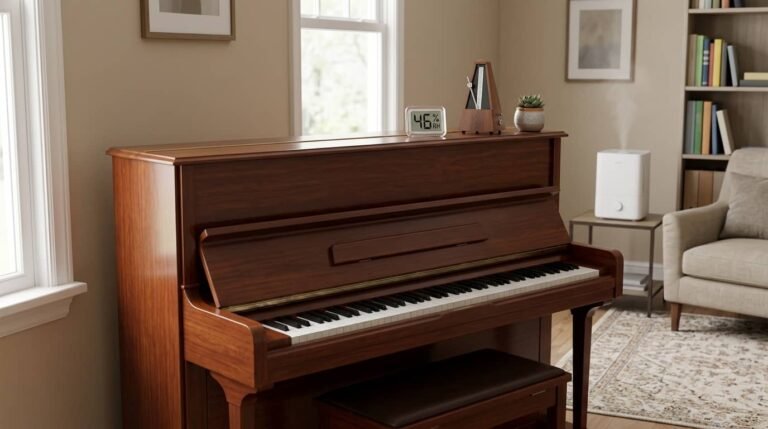
Climate and humidity play a significant role. Fluctuating humidity causes the wood in the soundboard to expand and contract, which affects tuning stability and touch. Homes with major seasonal humidity swings may need more frequent tuning than more stable, climate-controlled environments.
After a move to a new home, especially one involving a meaningful change in temperature or humidity, it can make sense to let the piano acclimate before having it tuned. Ask your technician how long they recommend waiting, since the appropriate acclimation period depends on the instrument and the environmental change.
What Happens If You Don’t Tune Often Enough
A piano that’s rarely tuned can drift far enough from standard pitch that a simple tuning isn’t enough to fix it. At that point, a technician may need to perform a pitch correction first, bringing the piano back toward standard pitch in stages before a proper fine tuning can happen. A pitch correction can take more time than a routine tuning and may increase the cost of the appointment.
A Quick Reference
| Piano Situation | General Guidance |
|---|---|
| Typical home acoustic piano | At least once a year; some manufacturers recommend more |
| New piano | May need more frequent tuning during the first year |
| Heavy teaching or performance use | More frequent service may be needed |
| After moving to a different environment | Ask your technician about acclimation before tuning |
| Digital piano | Does not require acoustic tuning |
Finding a Qualified Technician
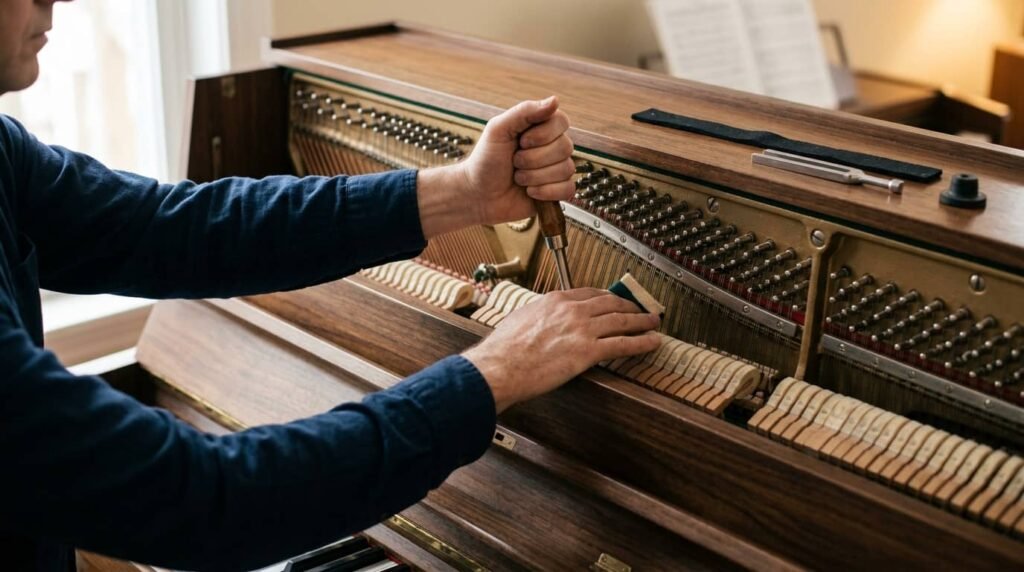
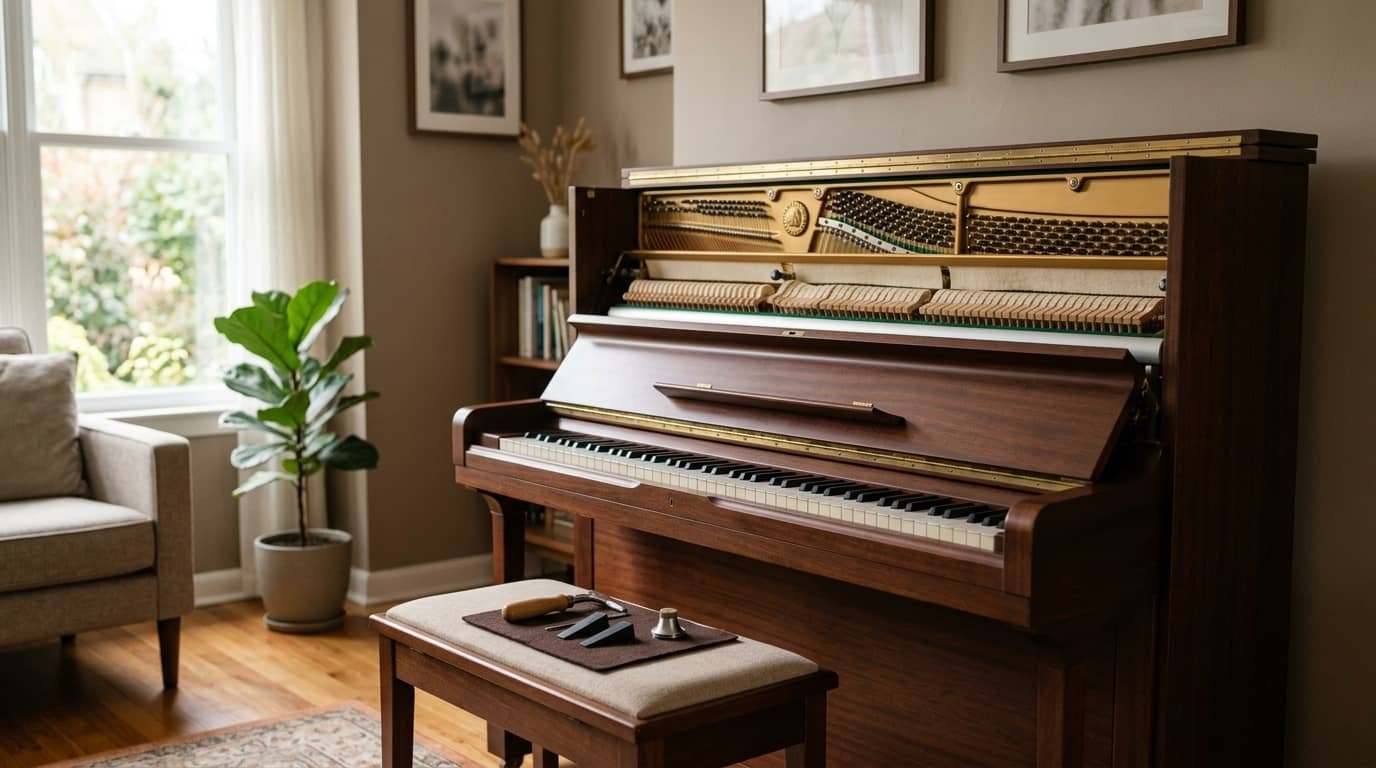
Piano tuning requires specialized tools, training, and the ability to make very small pitch adjustments accurately. For most owners, hiring a qualified technician is the practical choice.
If you’ve recently moved and need a technician, you can also ask your piano mover whether they have a local technician they recommend.
If you’re planning a move, see how to move a piano safely and when to hire a professional, learn how much a piano weighs, or check how much it costs to move a piano in Canada.
Frequently Asked Questions
Can I tune my own piano?
It’s not recommended. Piano tuning requires specialized tools and training that most owners don’t have.
How long does a piano tuning appointment take?
The length of a tuning appointment varies depending on the piano’s condition and how far it has drifted from pitch. A piano needing additional correction may take longer than a routine tuning.
Does a piano need tuning if nobody plays it?
Yes. Pianos go out of tune due to humidity and temperature changes regardless of whether they’re played.
How soon after moving should I get my piano tuned?
This varies by instrument and how significant the environmental change was. Ask your technician for their specific recommendation for your piano and situation.
Do digital pianos need to be tuned?
No. Digital pianos don’t require acoustic tuning since they don’t have physical strings that drift out of pitch.