How to Move a Piano: DIY or Hire a Pro?
So you’re wondering how to move a piano. Before you start, here’s the honest answer: most piano moves should be left to professionals.
That doesn’t mean there’s nothing you can do yourself. This guide covers what you can safely prepare on your own, and exactly where the line is for calling in a specialist.
Why Piano Moving Is Different From Regular Moving
Pianos are not just heavy furniture. Many acoustic pianos weigh several hundred pounds, while large grands can approach or exceed 1,000 pounds.
The weight is also not distributed like ordinary furniture. A large portion of an acoustic piano’s weight comes from its cast-iron plate and heavy wooden structure, which makes pianos prone to tipping if handled incorrectly.
One wrong move can damage the instrument, floors, walls, or doorframes, and can also cause serious injury.
What You Can Prepare Yourself
Even if you plan to hire professionals, there’s real preparation work you can safely handle before moving day.
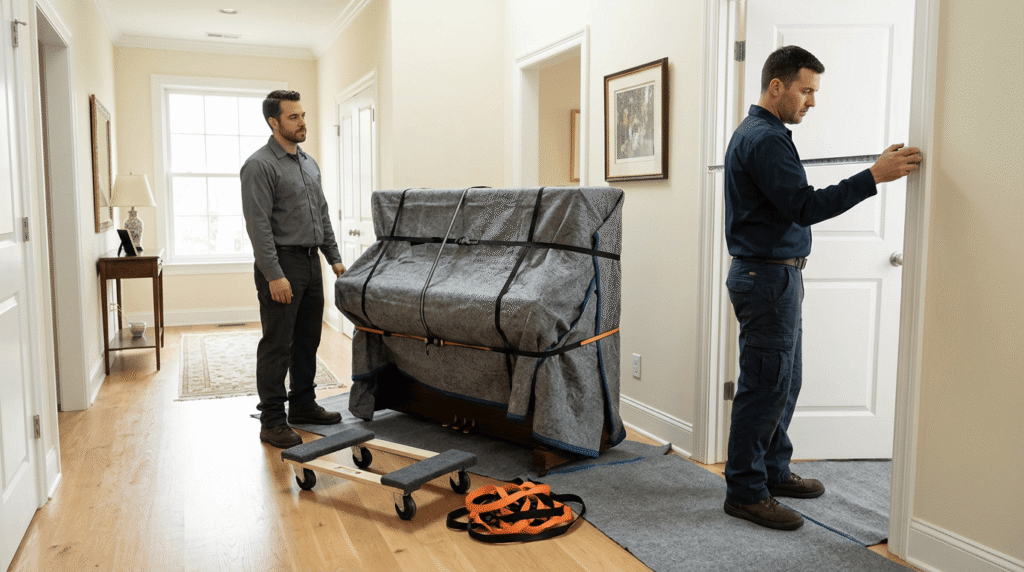
Measure the full route, including doorways, hallways, and any tight turns. Compare these measurements to your piano’s dimensions.
Clear the path completely. Remove rugs, furniture, and anything that could create a tripping hazard or narrow the route.
Protect vulnerable flooring along the route with appropriate floor runners or protective coverings.
Remove everything from on top of and inside the piano bench, and pack it separately.
Keep pets and children away from the work area on moving day.
If you’re moving locally, decide exactly where the piano will go in your new home before it arrives, so it only needs to be positioned once.
Equipment to Have on Hand
If any part of your move involves relocating the piano yourself, even for a short, flat, ground-floor distance, you’ll need the right equipment.
A piano skid or dolly appropriate for your piano’s size and weight. Don’t assume a general-purpose dolly is suitable just because its stated capacity exceeds the piano’s weight. U-Haul’s guide to how to move a piano recommends a piano skid or dolly along with proper pads and straps for any DIY portion of the move.
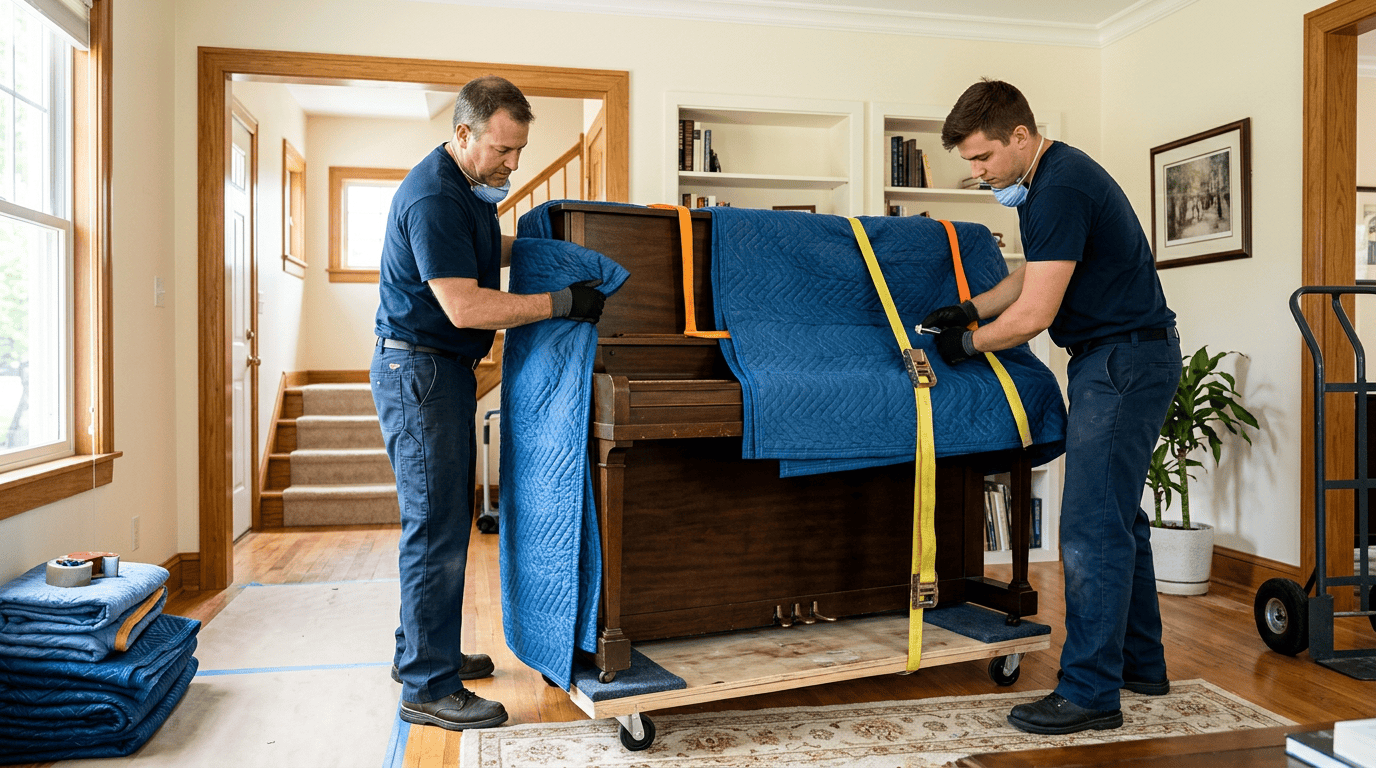
Furniture blankets or moving pads to fully wrap and protect the piano.
Ratchet straps or moving straps rated for heavy items.
Enough experienced helpers for the piano, the route, and the equipment being used. There is no safe universal crew size. If you’re unsure how many people the move requires, that’s a good reason to hire a specialist.
For a Simple Ground-Floor Move
If your move involves a short, flat distance with no stairs, no lifting, and no tight turns, some homeowners do handle this part of how to move a piano themselves.
The piano should be fully protected with moving pads and secured to appropriate piano-moving equipment, then kept under control throughout the route and loading process.
If the route involves stairs, steep ramps, tight turns, elevation changes, or lifting the piano at any point, stop and hire an experienced piano mover.
Moving a Grand Piano Is Different
Grand pianos are normally prepared for transport using specialized techniques and equipment. Depending on the instrument and the move, components may need to be removed and the piano secured to a grand piano skid or board.
Because the piano must be supported correctly throughout this process, grand piano preparation and moving is not a DIY job. Hire a mover with specific grand piano experience.
When You Should Hire a Professional
A few situations where hiring a specialist is almost always the right call.
- Moving a grand piano of any size
- Any stairs, especially more than a few steps
- Tight doorways, hallways, or corners
- Long-distance or interprovincial moves
- Condo or high-rise moves requiring elevator booking
- A piano with significant sentimental or financial value
Professional piano movers typically use purpose-built equipment and may carry specialized insurance or valuation coverage, depending on the company and the terms of the move.
The Real Cost Comparison
A DIY move costs you rental equipment, your own time, and the risk of damage. A professional move has an upfront cost, and may include insurance or valuation coverage depending on the mover and the terms of the job.
The potential cost of damaging a piano, flooring, walls, or property is worth considering when comparing DIY costs with a professional quote.
Want to know what a professional move typically costs? Run the numbers through our piano moving cost calculator, or see our guide on how much it costs to move a piano in Canada.
Frequently Asked Questions
Can two people move a piano?
There is no safe universal crew size. The number of people needed depends on the piano, the equipment, the route, and the experience of the crew. If the piano requires lifting, stairs, or difficult maneuvering, use professional movers.
How much does it cost to rent a piano dolly?
Rental costs vary by city and equipment provider. Before comparing DIY costs with a professional quote, check local prices for the appropriate dolly or skid, moving pads, straps, a ramp, and a truck if needed.
Can I move a piano without taking the legs off?
Upright pianos do not require leg removal. Grand pianos are typically prepared for transport by removing components such as the legs and pedal assembly as needed.
Is it cheaper to move a piano yourself?
It can be cheaper upfront, but the risk of damage changes the math quickly. A single mistake that damages the piano, your floors, or a doorway can cost far more than hiring a specialist would have in the first place.
Do I need a permit to move a piano in a condo building?
Some condo and apartment buildings require elevator reservations, proof of insurance, deposits, or scheduled moving windows. Check with your building management before moving day, regardless of whether you hire professionals or move it yourself.
Find a Piano Mover Near You
If you’ve decided professional help is the right call for how to move a piano safely, our directory lists verified piano moving specialists across Canada. Find piano movers in your province.