Free Piano? What It Really Costs to Take One Home in Canada
As an Amazon Associate and affiliate of other partners, we earn from qualifying purchases.
Free pianos are everywhere in Canada. Scroll Kijiji or Facebook Marketplace in almost any city and you’ll find uprights listed for nothing, often with a note that says “must pick up.”
That last line is the real price tag.
The piano may be free, but getting it home, making it playable and possibly getting rid of it one day all cost money. Here’s what to budget, what to check before you say yes, and how to tell a good free piano from a costly mistake.
Quick answer: A free upright usually costs $350 to $1,000 to take home in good shape, once you add a local piano move and a tuning after it settles. Stairs add to that. If the piano needs repairs to hold a tune, the bill can climb by $1,000 to $5,000, which is why a free piano is only a bargain if it’s healthy.
Why So Many Pianos Are Free
Some free pianos are perfectly playable. Others have been neglected for years and need costly repairs. Often, the owner simply wants the piano gone without paying to have it removed.
Demand for old uprights has dropped across Canada. In a CBC P.E.I. report, owners described listing pianos for weeks with only a handful of replies, mostly asking about measurements. A local tuner with more than 35 years of experience said he no longer takes free uprights himself, because the repairs would cost more than he could ever sell them for.
So the owner’s problem quietly becomes yours. When you accept a free piano, you also accept the cost of moving it, tuning it and, one day, removing it.
That doesn’t make every free piano a bad deal. It just means the decision should be about the instrument, not the price.
What a “Free” Piano Really Costs
Here is a realistic budget for a free upright moved within the same city. Moving prices match our piano moving cost calculator.
| Cost | Typical range |
|---|---|
| The piano | $0 |
| Local move, upright, ground floor | $250 to $800 |
| Each flight of stairs (either end) | $50 to $200 |
| Tuning after it settles in | $100 to $200 |
| Pitch raise, if it hasn’t been tuned in years | Often an extra charge on top of the tuning |
| Potential major repairs, only if it won’t hold a tune | $1,000 to $5,000 |
| Removal later, if it doesn’t work out | Often $250 to $400 or more |
Once you’ve checked the piano’s condition, find a professional piano mover in your area and get a quote before agreeing to take it home.
The move
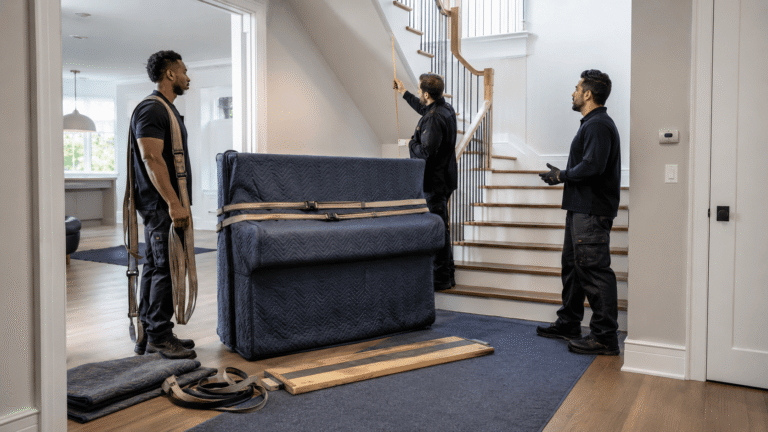
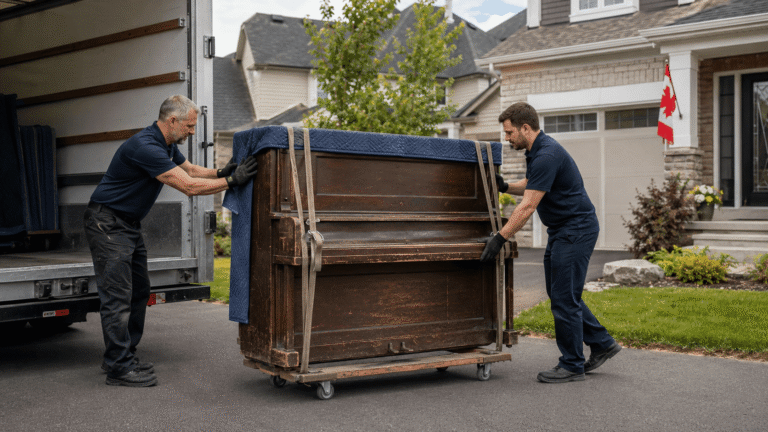
Moving is the biggest guaranteed cost. A local upright move in Canada typically runs $250 to $800, with the low end in smaller towns and the high end in major cities. An upright weighs roughly 200 to 500 pounds, and stairs, long carries and tight turns all add to the price.

A free grand or baby grand costs more to move, because the legs and lyre come off and the body travels on a skid board. If someone offers you a free grand, run the details through the calculator before you agree.
The tuning
Every piano needs tuning after a move, especially when it changes rooms, temperature or humidity. Give it about two to three weeks to adjust before you book a technician. A standard tuning usually costs $100 to $200.
Pianos that haven’t been tuned in years often sit well below standard pitch. Bringing them back up takes a pitch raise, an extra pass before the fine tuning. Some technicians charge a modest amount on top of a tuning for it. For example, one Ontario technician lists $150 plus HST for a tuning and $170 plus HST for a pitch raise with tuning.
A badly neglected piano may need more than one visit before it holds steady. Our guide to how often you should tune a piano covers what to expect after that.
The repairs nobody mentions
This is where free pianos get expensive.
If the tuning pins are loose, the piano won’t hold a tune no matter how often it’s tuned. The same tuner from the CBC report put the cost of making a damaged piano tunable again at $1,000 to $5,000, often because of years of humidity swings or neglect.
Worn hammers, sticky keys and broken strings add up too. On an old upright, those repairs can easily cost more than the piano is worth.
Getting rid of it later
If the piano turns out to be a dud, you’re now the person listing it for free.
Removal for a straightforward upright often starts around $250 to $400, with stairs and heavier pianos costing more. Our piano removal guide explains your options. It’s worth knowing that cost before you take a piano on, not after.
What to Check Before You Say Yes
You don’t need to be a pianist to spot most warning signs. Spend 15 minutes with the piano before you book a mover.
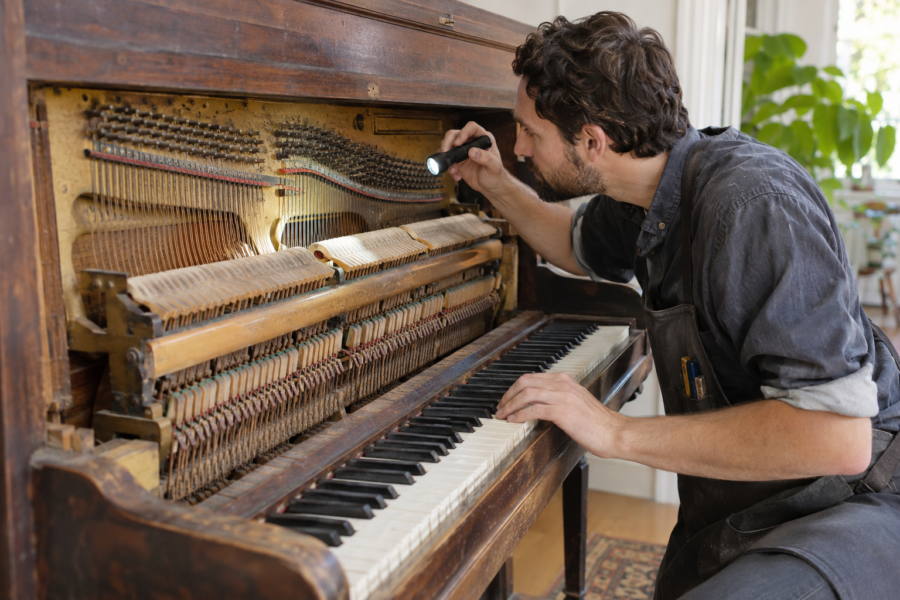
Play every key, one at a time. Listen for notes that are silent, stick down, or sound badly out of tune on their own. According to the Piano Technicians Guild, a single note that sounds very sour by itself can point to a worn pin block, one of the most expensive problems a piano can have.
Listen for rattles and buzzes. Play loudly in the lower and middle range. A rattle or buzz can have several causes, including loose parts or a soundboard problem. Have a technician identify the cause before committing to the piano.
Look inside. Lift the lid and shine a phone light in. Check for:
- Rust on the strings
- Mouse droppings or chewed felt
- Hammers with deep grooves worn into the felt
- Cracks in the large wooden panel at the back
Ask when it was last tuned. “Never” or “not since the kids moved out” is a warning sign. A piano that’s been tuned every year or two is a much safer bet.
Ask about its age. Very old pianos are more likely to have worn hammers, dead bass strings and loose tuning pins. An Ontario technician suggests being especially cautious with pianos made before about 1930.
Get a technician’s opinion first
If the piano passes your own check, the safest next step is to have a piano technician look at it before it moves. Paying for a short visit costs far less than moving a piano that can’t be saved. Ask what they charge for an assessment when you call.
You can find a qualified technician through the Piano Technicians Guild.
Measure both ends
Measure the piano, then measure every doorway, hallway and turn it needs to pass through at your home. Note any stairs at both addresses. Your mover will ask, and those details are what set the price.
When a Free Piano Is Worth Taking
A free piano can be a genuinely good deal when:
- It has been tuned regularly and the owner can tell you when
- Every key plays and nothing buzzes or sticks
- A technician has looked at it, or you’ve done the checks above
- The move is local, on the ground floor at both ends
- You plan to play it, not just keep it as furniture
In that situation, $350 to $1,000 for a working acoustic piano is good value.
When to walk away: the piano hasn’t been tuned in decades, several keys don’t work, there’s visible rust or rodent damage, or the move involves several flights of stairs. If you mainly want something to learn on, a digital piano may cost less than moving and repairing an old acoustic.
Watch Out for Free Piano Scams
Not every free piano exists.
A common scam offers a “free” piano, often a Yamaha said to belong to a late spouse, to a good home. The catch is that you have to pay a shipping company to deliver it. The Canadian Anti-Fraud Centre has warned about this scheme, and the Better Business Bureau has reported victims being asked for several hundred to nearly $2,000 in shipping fees for a piano that never arrives.
Red flags:
- A free piano offered by email or message that you didn’t ask about
- A sad story about a deceased owner
- The seller only communicates by email and can’t meet in person
- A “moving company” you’ve never heard of, with a brand-new website
- Pressure to pay quickly by e-transfer, wire, gift card or crypto
- A second fee, such as “storage,” after you’ve paid the first
A real free piano is one you can see, play and pick up yourself, or have moved by a piano mover you chose. Never pay a shipping company the giver arranged. Find your own mover in our directory, where each company has been checked to confirm they offer piano moving.
Frequently Asked Questions
Are free pianos worth it?
Sometimes. A free piano that has been tuned regularly and has no major problems can be a great deal once you add moving and tuning. One that hasn’t been maintained in years can cost more to fix than a good used piano would cost to buy.
How much does it cost to move a free piano?
The same as moving any piano. A local upright move usually costs $250 to $800, plus $50 to $200 for each flight of stairs. Grands cost more. Use the piano moving cost calculator for a range based on your situation.
Can I move a free piano myself with friends?
It’s possible, but risky. Uprights are top-heavy and easy to tip, and a drop can damage the piano, your floors and the people carrying it. Read our guide on how to move a piano before you decide.
Should I get a free piano tuned right away?
It’s usually better to wait about two to three weeks after a move so the piano can adjust to the temperature and humidity in its new home. Ask your technician if an earlier appointment makes sense.