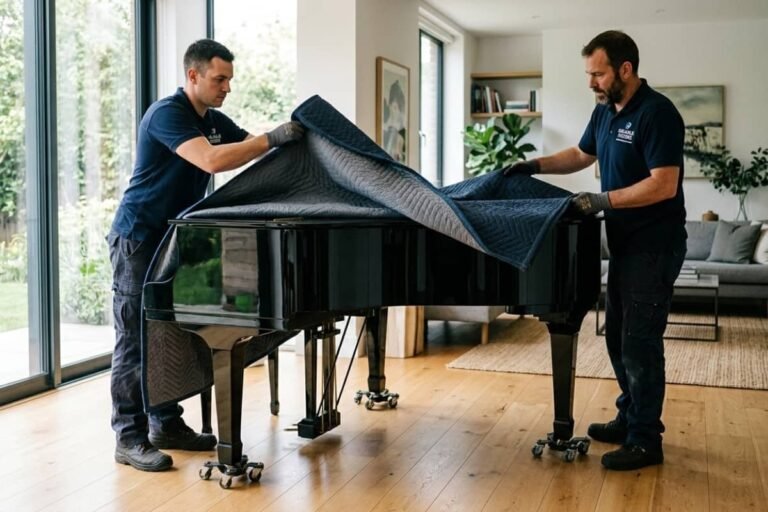
Piano Removal in Canada: Costs and Options
Getting rid of a piano is harder than most people expect.
You usually can’t treat it like ordinary curbside garbage, and disposal rules vary by municipality. The thing you assumed someone would be grateful to receive often turns out to be something nobody wants.
Here’s what piano removal costs in Canada, what happens to the instrument afterwards, and how to find a service in your area.
Quick answer: Piano removal for a straightforward upright in Canada often starts around $250 to $400, with stairs, difficult access, heavier uprights and grand pianos costing more. If the piano still plays, try selling or donating it before paying for disposal. Otherwise a piano mover or junk removal company can take it away and arrange recycling or disposal.
What Does Piano Removal Cost?
There is no standard national price, and most companies won’t quote one until they know your situation.
Published starting prices vary widely. In Toronto, 7 Moving advertises piano removal from $257. In Montreal, Déménagement Cargo starts at $350, with ecocentre disposal fees included in the fixed price.
Many junk removal companies don’t publish a piano rate at all. They price by truck volume and treat a piano as a surcharge item, which is why searching for a straight answer online tends to be frustrating.
Martin Winiarski of Piano Movers Winnipeg told CBC he charges $300 to $400, depending on the floor the piano is on, its size and weight, and how far it has to travel.
Prices checked August 2026. These are advertised starting figures, not average quotes.
The cost drivers are the same ones that apply to any piano move:
- Stairs, especially from a basement or second floor
- Piano type and weight, with grands costing more than uprights
- Access, including tight hallways, turns and doorways
- Distance to the recycling or disposal facility
- Disposal fees, which some companies include and others bill separately
Removal is priced like a move because it is one. Someone still has to get several hundred pounds of instrument out of your house without damaging the house.
Our piano moving cost calculator shows how piano type, stairs and access affect the moving portion of the cost. Disposal or recycling fees may be additional.
Why You Probably Can’t Give It Away
This is the part most people get wrong.
There is a large supply of older pianos in Canada and limited demand for many of them.
Schools, churches and community centres are often offered older pianos. Most already have an instrument, and the ones that don’t often can’t take on the tuning and maintenance costs that come with a free piano.
The CBC reported on Manitoba homeowner Jenna Warriner, who spent a long stretch trying to find a home for an upright that came with her house. She listed it in multiple places. It still didn’t move.
Martin Winiarski said he has taken in roughly 135 pianos for disposal. He sells or donates the ones he can. He estimates he has had to destroy about 65 of them.
That’s not pessimism. It’s the actual market.
When Donation Is Realistic
Donation works when the instrument is genuinely worth someone else’s time and money.
Better donation candidates tend to:
- Play properly and hold a reasonably stable tuning
- Have working keys, pedals and action
- Show no obvious moisture, mould or pest damage
- Have been stored in a climate-controlled living space
- Be worth the cost of professional moving and any servicing needed
Pianos become harder to donate when they:
- Haven’t been serviced in many years
- Have sticking or dead keys
- Can’t hold pitch
- Show significant moisture or structural damage
- Need repairs likely to exceed their market value
A standard tuning can easily run $100 to $200, and a neglected piano may need a pitch correction before it can be brought back to normal pitch. That cost lands on whoever takes it, which is exactly why many organisations say no.
If you’re unsure, a piano technician can assess the instrument before you spend weeks trying to give it away.
Where to try: local music teachers, community theatre groups, churches and community organisations. Be honest about condition. A piano that arrives needing $2,000 of work does the recipient no favours.
What Happens to a Piano That Can’t Be Saved
Some removal companies dismantle unusable pianos so recyclable materials can be separated rather than sending the whole instrument to landfill.
A piano breaks down into several material streams. The cast-iron plate is the heaviest single component and is scrap metal. The cabinet and soundboard are wood. Strings, tuning pins and hardware are metal. Felt, wool and leather generally aren’t recyclable.
Practices vary by company and by what local facilities will accept, so it’s worth asking directly rather than relying on a general claim about being eco-friendly.
One thing worth knowing: some older pianos have genuine ivory key coverings. If yours does, don’t assume the keys can simply be removed and sold. Canada has specific rules governing the import and export of elephant ivory, including ivory contained in musical instruments.
Should You Dismantle It Yourself?
Generally, no.
A piano’s strings are under enormous combined tension, supported by the cast-iron plate. It also contains extremely heavy components and awkward materials. Dismantling one is not the same as breaking down ordinary furniture.
You’d also still be left with the disposal problem, since municipal facilities have their own rules about what they’ll accept and in what condition.
If you have the tools, the space and protective gear, it’s possible. For nearly everyone, paying to have it handled is the better trade.
Finding Piano Removal in Your Area
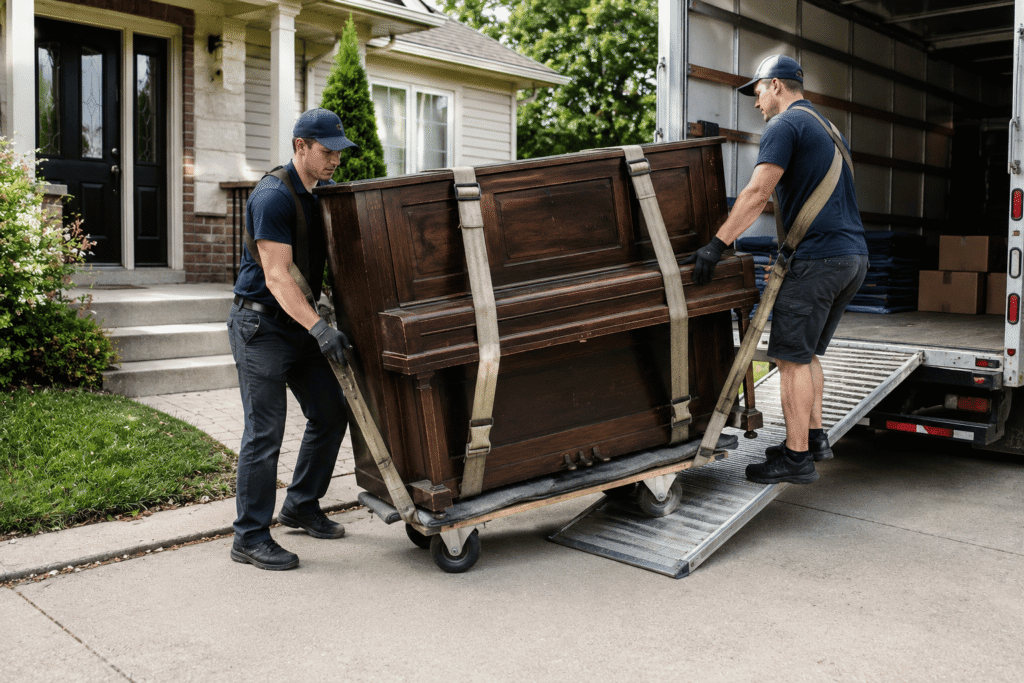
Two kinds of company do this work, and the right one depends on your piano.
Piano moving specialists are the better choice for anything with donation or resale potential, or where access is difficult. They already own the skid boards, straps and dollies, and can assess whether the instrument is worth saving before it goes anywhere.
Junk removal companies are often cheaper for a piano that’s definitively at the end of its life, though coverage varies and some won’t take pianos at all.
Ask any company three things before booking:
- Is the disposal fee included in the quote or billed separately?
- What happens to the piano afterwards?
- Are stairs and access charged extra?
Several of the piano moving companies in our directory offer removal and disposal alongside standard moving.
Frequently Asked Questions
How do I find piano removal near me?
Start with piano moving specialists in your city rather than general junk haulers, particularly if the instrument might be donated or resold. Our directory lists verified companies by province and city.
Will anyone take my old piano for free?
Sometimes. A private recipient may take a playable piano for free and arrange the move themselves. Free professional removal is less common and is usually offered only when the piano has enough resale or reuse value to justify the pickup.
Can I put a piano in the landfill?
Rules vary by municipality, and a piano’s size and mixed materials often complicate things. Check with your city before assuming, and expect a fee if they do accept it.
Is it cheaper to donate than to dispose?
It depends on who pays for the move. If you pay to deliver the piano, donation can cost roughly as much as moving it anywhere else. If the recipient arranges and pays for pickup, donating may cost you little or nothing.
What if my piano is a family heirloom?
Get it appraised before deciding. A piano technician can usually tell you in one visit whether restoration is realistic and roughly what it would cost.