Where Should You Put a Piano in Your Home?
Where should you put a piano in your home? The best place is somewhere with stable temperature and humidity, away from direct sunlight and heating or cooling airflow. An interior wall is often a good choice, but the room conditions matter more than the wall itself.
Here’s what to consider when choosing where your piano goes, and why it matters more than most people expect.
Avoid These Four Things
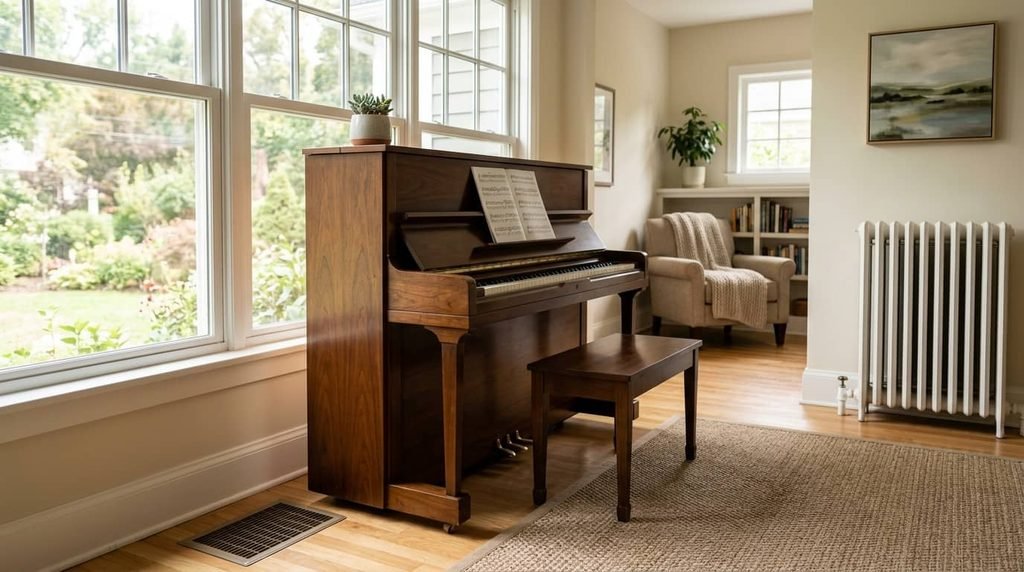
Direct sunlight. UV exposure fades the finish over time and heats the piano unevenly, which can affect tuning stability. Keep the piano out of direct sun for any part of the day if possible.
Heating and cooling vents. Direct heating or cooling airflow can create localized temperature and humidity changes around the piano. A piano positioned directly in the path of a vent tends to be more exposed to these swings than one in a stable spot.
Exterior walls, in some cases. Exterior walls are not automatically a problem, especially in a well-insulated home. The concern is whether the wall creates noticeable temperature or humidity changes around the piano. If you live somewhere with extreme seasonal temperatures, an interior wall may still be the better choice.
Active heat sources. Avoid placing a piano close to an active fireplace, wood stove, radiator, or other concentrated heat source.
Grand Piano Placement
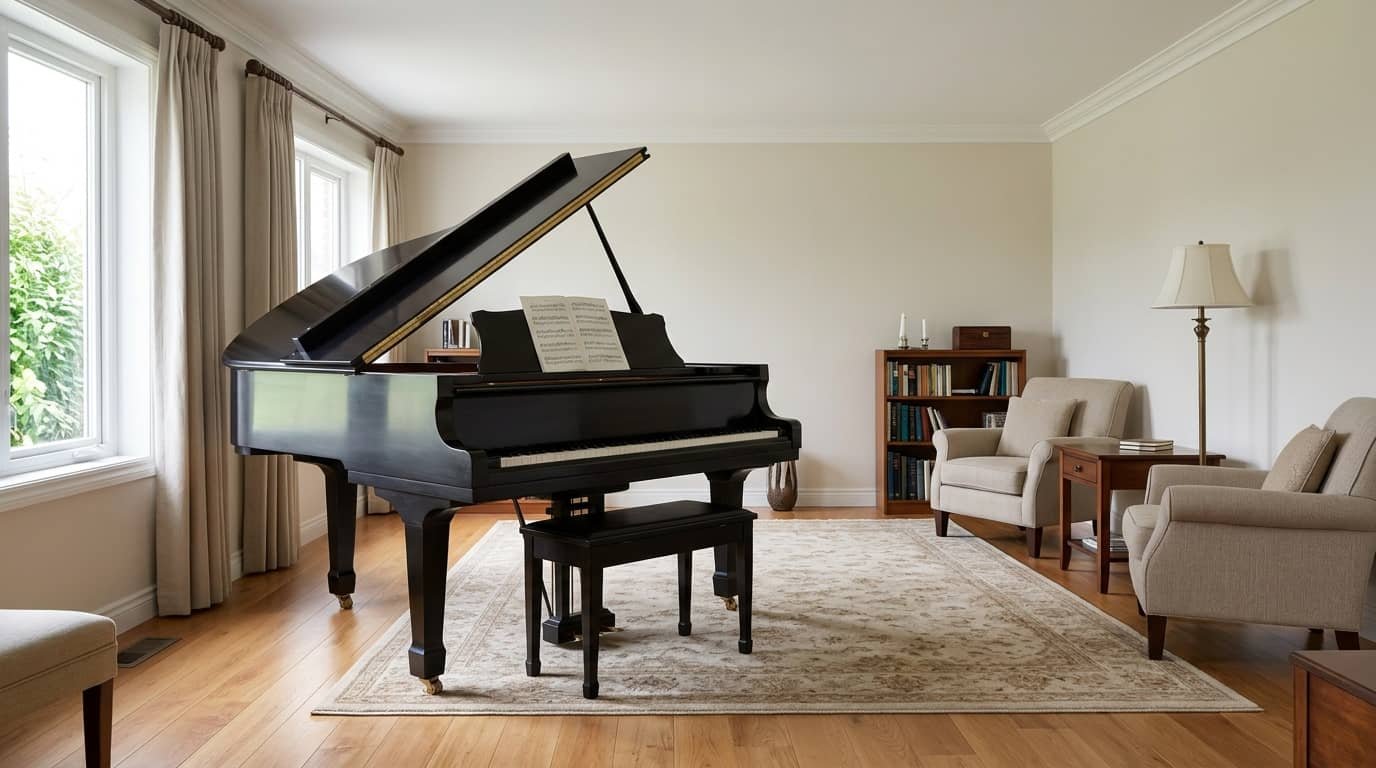
Grand pianos need enough space around them for comfortable playing, servicing, and safe movement. Because a grand interacts with the room differently from an upright, it can be worth trying more than one orientation before settling on the final position.
In larger rooms, many owners angle the piano into the space rather than placing it tightly against a wall.
Upright Piano Placement
Upright pianos are more flexible than grands and typically work well against an interior wall, away from windows and vents. Leave enough clearance behind the piano for ventilation and access rather than pressing it tightly against the wall.
Does the Room’s Acoustics Matter?
Yes, though it’s a secondary consideration compared to temperature and humidity stability. Heavy carpets, fabric, and upholstered furniture tend to absorb sound, while wood and tile surfaces produce a brighter, more resonant sound. Neither is objectively better, it comes down to personal preference. If a room feels too live or echoey, an area rug near the piano can help absorb some reflected sound.
What If You Don’t Have an Ideal Spot?
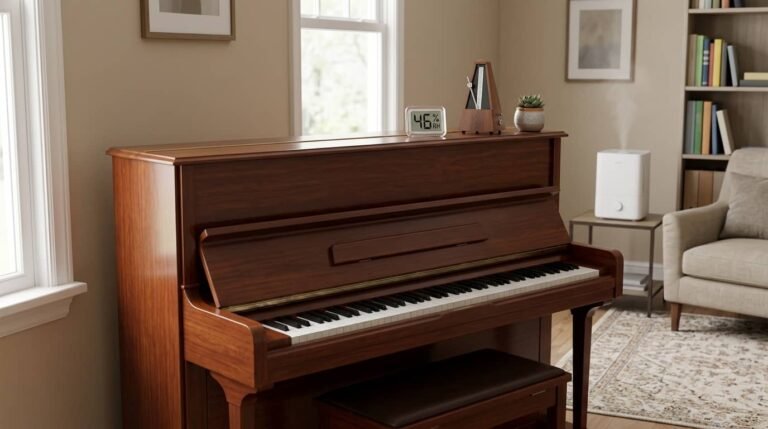
Most homes have some constraint that makes the textbook-perfect placement impossible. If your options are limited, prioritize avoiding direct heat, sunlight, and airflow first. Then monitor the room with a hygrometer so you can see whether humidity is staying reasonably stable. Learn more in our guide to the best humidity for a piano.
Frequently Asked Questions
Can I put a piano near a window?
It’s best to avoid it. Windows can introduce direct sunlight and localized temperature changes, both of which can affect the piano’s finish and tuning stability over time.
Is it bad to put a piano on an exterior wall?
Not automatically, particularly in a well-insulated home. In homes with poor insulation or in climates with extreme seasonal temperatures, an interior wall is still the safer choice.
Can radiant floor heating damage a piano?
Radiant floor heating can expose a piano to heat from below. Yamaha’s piano care guidance advises avoiding placement directly over the heat source. If underfloor heating is your only option, ask a piano technician about the safest placement for your specific model. This is one of the more important details to sort out when deciding where should you put a piano in a home with underfloor heating.
How much space should be left between a piano and a wall?
Leave a modest amount of clearance behind an upright rather than pressing it tightly against the wall. The exact spacing is less important than maintaining ventilation and access.
Does piano placement affect how often I need to tune it?
Yes. A piano in a stable location away from vents, sunlight, and drafts will generally hold its tuning better than one exposed to frequent temperature or humidity swings. See our guide to how often you should tune a piano for more detail.