How Much Does Piano Storage Cost in Canada? (2026 Guide)
Storing a piano is not the same as storing furniture. A piano is a large wooden instrument under thousands of pounds of string tension, with felt, leather, and metal components that all respond to changes in temperature and humidity. Put it in the wrong storage environment and it can come out damaged in ways that are costly to repair.
If you need to store a piano during a renovation, a move, or a gap between homes, here is what that costs in Canada and what to look for before you book.
Why Regular Storage Units Can Be Risky
An unheated or poorly climate-controlled storage space can experience substantial seasonal changes in temperature and humidity. Wood components expand and contract as moisture levels change, while prolonged damp conditions can contribute to corrosion, swelling, and other problems. Very dry conditions can also affect wooden components and glue joints.
That does not mean every self-storage facility is unsuitable. The important distinction is whether the facility can provide a stable environment appropriate for a piano, rather than simply keeping the unit sheltered from the weather.
What to Look for in Piano Storage
Climate control. Piano manufacturers commonly recommend moderate indoor temperatures and relative humidity somewhere around 40 to 60 percent, with avoiding large or sudden fluctuations being especially important. Climate-control standards vary widely among storage facilities, so do not assume that a unit advertised as climate-controlled also regulates humidity. Ask specifically what range the facility maintains and whether humidity is actively monitored.
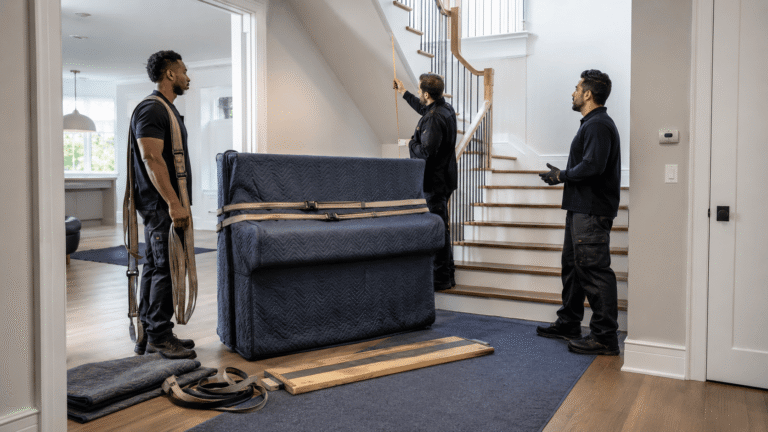
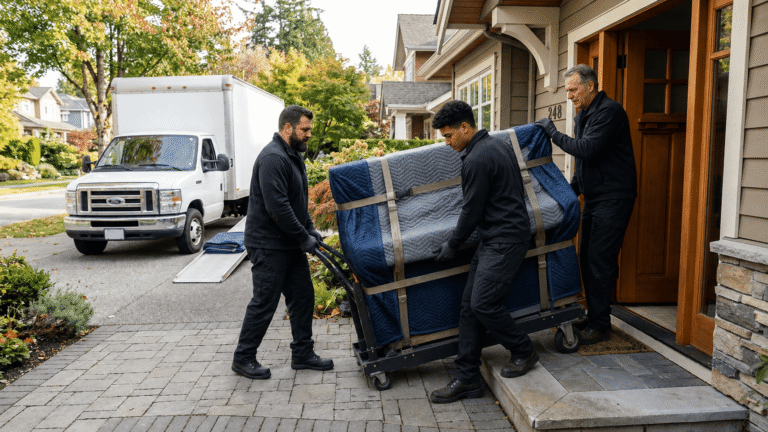
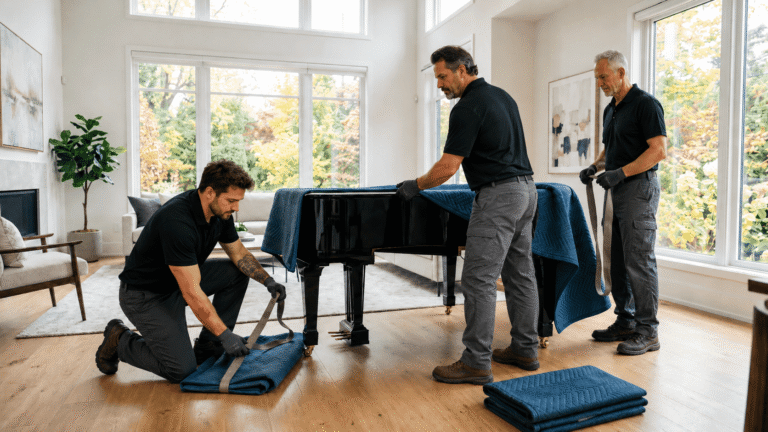
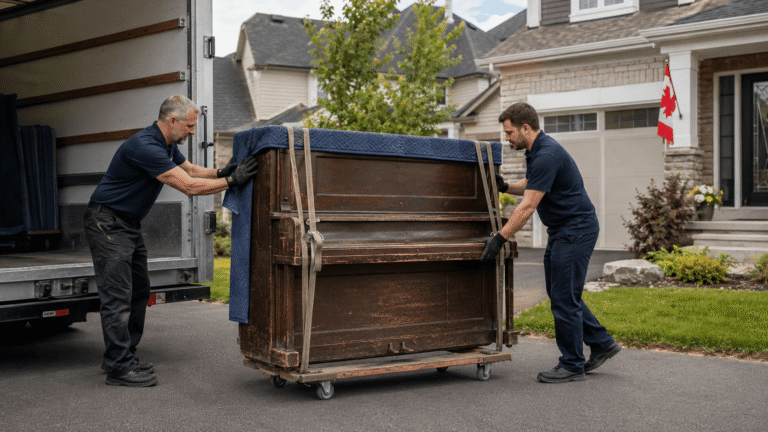
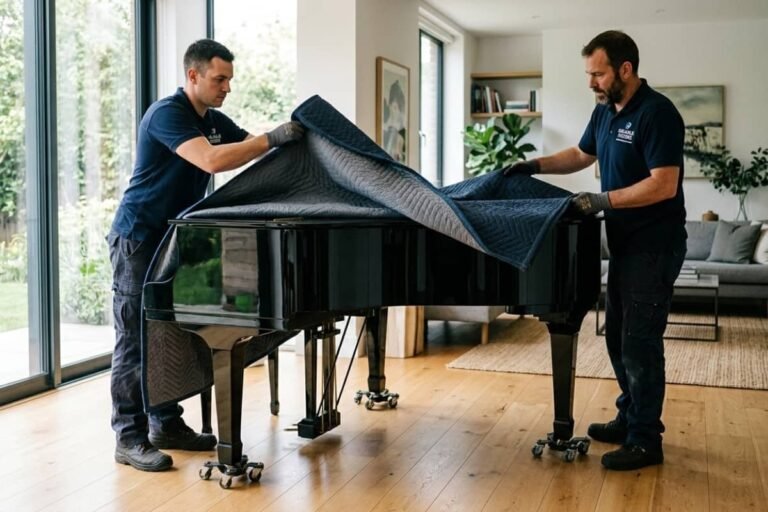
Specialist handling. Facilities run by piano movers or piano dealers understand how to wrap, support, position, and protect an instrument properly during storage. Improper support, inadequate padding, or careless handling can damage the cabinet, legs, pedals, or other components before climate even becomes a factor.

Insurance. Confirm that the facility covers your instrument and what the coverage limit is. High-value instruments may need additional coverage.
Access and monitoring. Reputable facilities are secured and monitored and restrict access. Ask whether staff are on site or whether the facility is remotely monitored.
How Much Does Piano Storage Cost in Canada?
All prices below are in Canadian dollars and reflect published rates from piano storage providers.
| City | Provider | Upright | Grand |
|---|---|---|---|
| Toronto | Paul Hahn & Co. | $165/month | $275/month |
| Toronto | High Stream Moving | $125/month | Ask for quote |
| Calgary | Plam’s Piano | $125/month | $199/month |
| Vancouver | Metro Vancouver Movers | $60–$80/month | $100–$120/month |
| Montreal | Déménagement Piano Transport | From $100–$120/month | From $150/month |
These are published storage rates only. Applicable taxes, pickup and delivery, handling, or other fees may be charged separately depending on the provider.
The general range across Canada for specialist piano storage runs from roughly $60 to $275 per month depending on the city, the provider, and the size of the instrument. Grand pianos generally require more storage space, which is often reflected in higher monthly rates.
Discounts for longer terms. Déménagement Piano Transport in Montreal publishes a tiered discount program: 10 percent off for storage beyond six months, 15 percent off beyond twelve months, and 20 percent off beyond eighteen months. It is worth asking any provider whether long-term rates are available.
Free first month. Easy Moving in Toronto includes one month of free climate-controlled piano storage with any piano move booking. High Stream Moving in Toronto also offers the first month free alongside a move. If your storage need coincides with a move, this is worth factoring into the total cost.
When Piano Storage Makes Sense
Home renovations. This is the most common reason. Dust, paint fumes, and the physical disruption of a renovation are all risks for a piano left in place. Short-term specialist storage protects the instrument while work is underway.
Gap between homes. If possession dates do not align or you are moving into temporary accommodation before settling into your permanent home, piano storage bridges the gap without leaving the instrument in an unsuitable space.
Staging a home for sale. Removing a large piano can make a space photograph and show better. Storage during the listing period is often more practical than trying to sell the instrument quickly.
Extended time away. If you are leaving the country for months at a time, leaving a piano in an unoccupied home, particularly one without consistent heating, carries risk. Specialist piano storage can provide a more stable environment while the property is unoccupied.
Getting a Quote
Rates vary by city and by how the provider calculates storage, so it is worth contacting two or three options directly. When you call, be ready to share:
- Piano type (upright, baby grand, grand) and approximate size
- How long you expect to need storage
- Whether you need the provider to handle pickup and delivery, or whether you are arranging transport separately
Some Canadian providers offer a free first month when storage is combined with a piano move. Find piano movers and storage providers in your province.
Frequently Asked Questions
Can I store a piano in a regular self-storage unit?
A regular self-storage unit may be suitable only if it provides the environmental conditions your piano needs. Many facilities use the term climate-controlled to describe temperature management, so confirm whether relative humidity is also monitored and controlled. For valuable instruments or longer-term storage, a specialist piano storage facility is the safer choice.
How long can a piano stay in storage?
There is no fixed maximum when the piano is properly supported and kept in stable environmental conditions. Long-term storage is common, but ask the provider how the instrument is protected, monitored, insured, and accessed during extended stays.
Will my piano need tuning after storage?
Probably, particularly after a longer storage period or a change in environment. Once the piano is back in its permanent location, allow it time to acclimate before arranging a tuning. A wait of roughly two to four weeks is commonly recommended.