How to Move a Piano Upstairs: What to Expect and When to Call a Pro
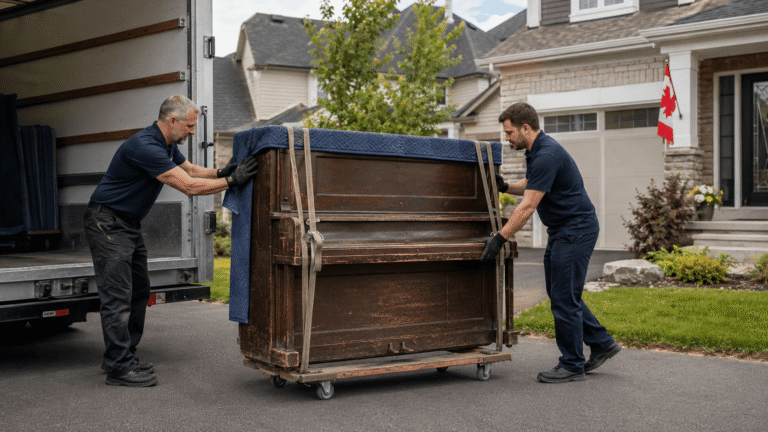
Moving a piano across a flat floor is already a job most people underestimate. Moving one up a staircase is a different problem entirely. The weight does not change, but the risk does. A piano that starts sliding back on a staircase is extremely difficult to stop, and the consequences for the instrument, the movers, and the walls and banisters in the way can be significant.
Quick answer: Moving a piano up a full flight of stairs is generally a job for specialist piano movers. Uprights can weigh several hundred pounds, and turns, landings, low ceilings, and narrow staircases increase the risk substantially. Professional movers assess the route first and use piano-specific equipment and an appropriate crew for the instrument and staircase.
Why Stairs Change Everything
On a flat surface, a piano on a dolly rolls under control. On stairs, that control becomes much harder to maintain. Upright pianos can weigh anywhere from roughly 200 to 800 lbs depending on the style and model. Smaller spinets sit toward the low end, while full-size uprights can exceed 500 lbs.
The weight is also not evenly distributed. Upright pianos are relatively top-heavy, which makes controlling the instrument more difficult once it is tilted or placed on an incline. On stairs, gravity and the changing angle make that control considerably harder than on a flat floor.
Add a tight landing, a low ceiling, or a turn in the staircase and the job becomes considerably more complex. In homes with low staircase ceilings, navigating a full-size upright can be especially difficult.
What Professional Movers Do on Stairs
Crew size increases when necessary. A stair move may require additional movers depending on the piano’s weight, the number of steps, the staircase layout, and the available clearance. The mover should determine crew size after assessing the job.
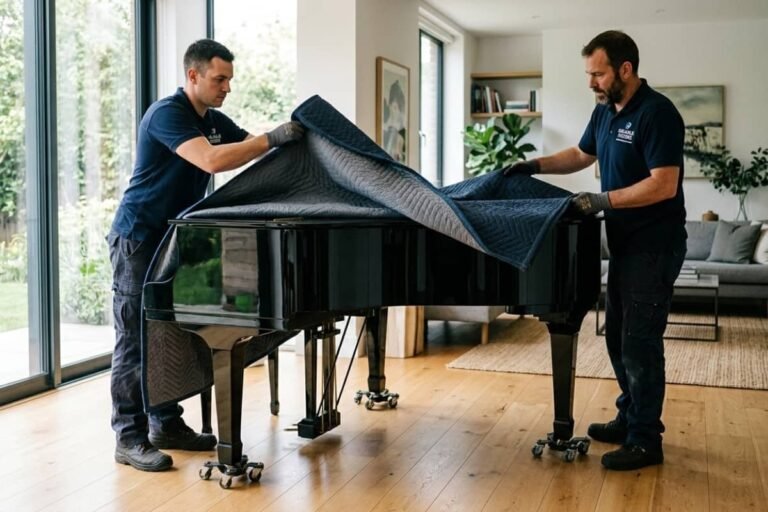
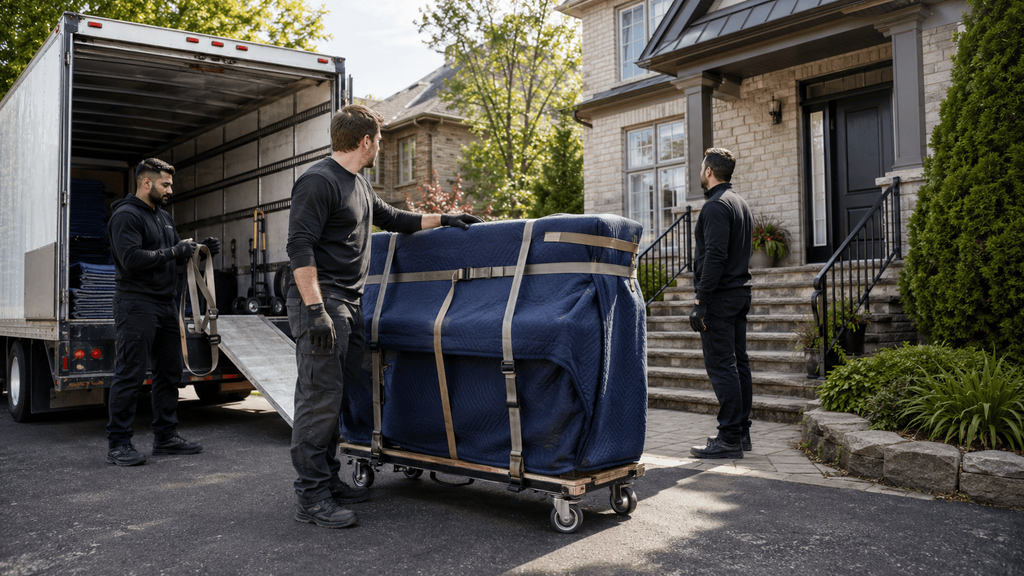
Equipment is purpose-built. Professional crews may use piano boards or skid boards, heavy-duty straps, specialized dollies or stair equipment, moving blankets, and floor and wall protection. The exact equipment depends on the piano and staircase.
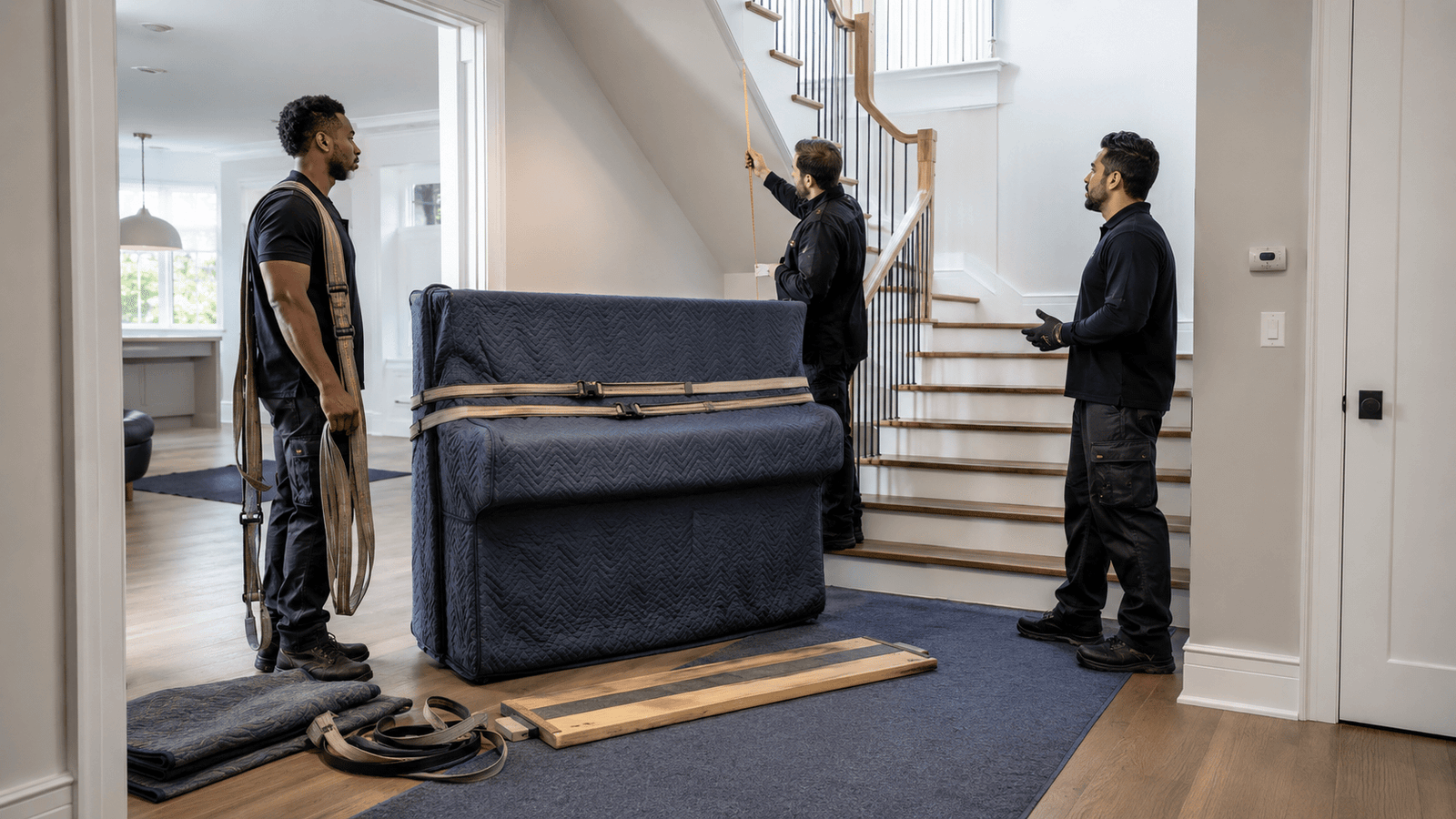
The route is assessed before anything moves. A professional crew measures ceiling heights, stair width, landing dimensions, and turn angles before the piano leaves its starting position. If a standard approach will not work, they adapt before the piano is committed to the staircase, not halfway up.
Walls and banisters are protected. Experienced movers pad walls, doorframes, and banisters before the move begins. Protecting walls, doorframes, and banisters helps reduce the risk of costly property damage during the move.
When a DIY Move May Be Reasonable
Moving a piano over a single low threshold or very small step is different from carrying one up a full staircase. Even then, the piano’s weight, available clearance, flooring, and equipment all matter.
For a full flight of stairs, particularly with a full-size upright, a landing or turn, a narrow stairwell, or limited ceiling clearance, hiring a specialist piano mover is the safer choice. The potential cost of an injury or a dropped piano is much greater than the savings from attempting the move yourself.
If you’re deciding whether a move is suitable for DIY at all, see our guide to moving a piano yourself versus hiring a pro.
What to Tell Your Mover About the Stairs
If you are booking a professional piano mover, describe the staircase accurately before getting a quote. Companies price stair moves by the step or by the flight, and access conditions affect the final number.
Be ready to share:
- Number of steps
- Whether there is a landing or turn partway up
- Stair width and ceiling height if you can measure it
- Whether there is a railing or banister and which side it is on
- Floor type on the stairs (carpet, hardwood, tile)
Some movers price stairs by the step, while others price them by the flight. Calgary Piano Movers currently charges $4 per step for uprights up to 42 inches and $5 per step for larger uprights, with additional charges possible for turns and landings. Parkview Moving in Ottawa lists $75 to $150 for a single upright-piano flight and $150 to $250 per flight for multiple flights or a narrow staircase.
For the full picture on what a stair move adds to your quote, see our piano moving cost guide and local piano moving cost guide. Find a piano mover in your province.
Frequently Asked Questions
How many people does it take to move a piano upstairs?
Crew size depends on the piano, the staircase, and the access conditions. A professional mover should assess the job and determine the appropriate crew before the move begins.
Will my piano need tuning after the move?
A move can affect a piano’s tuning, particularly when the instrument is also adjusting to a different temperature or humidity level. Once it has settled into its new location, have it checked and tuned if necessary. A wait of roughly two to four weeks is commonly recommended after a move.
What if the staircase is too narrow or the ceiling is too low?
A specialist mover may recommend an alternative route, which can include professional rigging, a lift, or a crane through a window or balcony opening. These jobs require an on-site assessment and a separate quote.